Showing posts with label LOCAL TALENT. Show all posts

Sunday, June 8, 2014

HESSIAN MAGAZINE


I am super excited to announce that I am now the Editor-in-Chief and Fashion Director of a new Melbourne-based independent fashion magazine, HESSIAN. 

HESSIAN strives to bring sustainability to the forefront of Australian youth fashion without compromising aesthetics or insisting upon radical practices. We’re not your average ‘green magazine’; we don’t preach complicated and extreme lifestyle changes or beat you into submission with tales of eco-gloom. Instead, we provide a new perspective - we deliver you ecofriendly content with a new look because we’re here to show you sustainable living doesn’t have to be f**king boring.

HESSIAN is seeking out sustainable youth fashion that is contemporary; we are breaking free of the nostalgia for a past we never lived, instead looking to the future we want to save.

To contribute, get involved or for other queries, please contact:
contact@hessianmagazine.com


Like HESSIAN on Facebook: 
www.facebook/hessianmagazine

Visit HESSIAN for more details:

www.hessianmagazine.com

Thursday, April 24, 2014

INTERVIEW WITH CARLIE BALLARD


Photo: The Clean Cut team with Founder/Editor of Peppermint Magazine Kelly Sheenan, me (Siggi McCarthy) and my colleague at Ethical Clothing Australia Rebekka Carey-Smith. 

The Clean Cut Designer Showcase was part of this year's Mercedes Benz Fashion Week in Sydney. You can read more about the sustainable fashion event here. Below is an interview I did with one of the lovely Clean Cut founders, Carlie Ballard.  

Could you please give me a little background on the Clean Cut team? What brought the girls together?

The 4 of us who started Clean Cut are all Sydney-based and really felt the void of a sustainable presence in the Australian fashion scene. We could see what was happening in the industry locally and globally and soon realised that we needed to create a meeting point and a presence to celebrate the work of sustainable designers here in Australia. It quickly became apparent that it was actually up to us to make this happen. I (Carlie Ballard) called on 3 girls I had worked with over the past few years - Kelly Elkin from ALAS the label, Lisa Heinze Author of newly published book Sustainability with Style and Yatu Widders-Hunt published eco writer, blogger at Thinking Fashion and media and communications expert. After our first meeting there was no turning back and we were planning the vision for our organisation from day 1.

What criteria did you consider when selecting designers to showcase at the event?

For the event we had a fairly strong idea of the labels we wanted to represent. We knew we needed to showcase the labels with a strong brand experience. And we also wanted to ensure we represented many of the different mediums sustainable designers are working with in this space. The Clean Cut showcase is about celebrating the steps designers are taking toward a fairer and more sustainable fashion future so we didn’t want to be purist with our choices.

Our industry has many bodies including Fair Trade Labelling Organisation (FLO), GOTS Certification, Made-By and Ethical Clothing Australia to name the major ones, so we sought a few labels with these credentials. But for many grassroots companies (which this industry has many) this is too costly, so it comes back to understanding their business model, the task at hand, such as ensuring fair labour rights, sustainable and ecological fabric choices and manufacturing, low and no waste pattern-making and empowering co-operatives to harness the beauty of traditional crafts and sustaining livelihoods through business.  

What makes Clean Cut different from other sustainable fashion runway shows? 

From Day 1, we knew that if we (sustainable fashion) were going to create waves and be included in the wider fashion community there could be no compromise on aesthetic, quality or style. We also knew that we needed to promote sustainable fashion outside of the sustainable fashion bubble, and be inclusive to the wider fashion industry. We saw this as the only option to make real change. We had to put on a production that was MBFW ready. The best models, beautiful space, leading stylists to ensure sustainable fashion stood tall next to the other MBFW shows during the week.

You are developing an online directory that will eventually act as a ‘guide to the sustainable fashion world.’ Could you please explain this in a bit more detail?  

Yes, we’re really excited about this. We are calling it a ‘Style Guide’. It’s basically a go to directory so consumers can easily find the labels across the globe that are actively working in this space. This is where much of the problem lies, the outlets for many sustainable designers are limited and hard for consumers to get their hands on. So this will be great for consumers to shop based on their values. Our mission is to bring back the value in clothing, start getting people to make more considered fashion purchases, buy quality not quantity. Our clothing choices are very defining so it’s important that the social and environmental impact behind their manufacture are taken into consideration too.

What are your thoughts on the current Australian fashion landscape, with regard to the sustainable design sector?

I’m excited! Changing the face of the fashion industry was and is never going to be a speedy task. When I started in this space back in 2007 everything that I entered into Google lead me to the northern hemisphere. There were definitely brands working in this space in Australia but they were limited. Today there are new design led brands popping up all the time that are working with beautiful natural fibres and harnessing the talents of artisans and importantly ensuring that fair working conditions are ingrained into the core of the business. It’s definitely exciting to see well known labels such as Ginger and Smart, Scanlan Theodore and Manning Cartell become Ethical Clothing Australia accredited. Sustainable fashion is growing, and pressure is definitely building for all labels to start to take steps in the right direction. It’s the future of the fashion industry so it’s only a matter of time.

How do you think we can promote further sustainable and ethical design within the local industry?

Definitely by having the Clean Cut Designer Showcase each year to celebrate exciting labels in this space, but we also have lots of plans to educate at the grassroots level. Students are completely aware of sustainability now, so it’s really important that the emerging designers are incorporating sustainable and ethical practices into their businesses. Also, Clean Cut is excited to be an industry body to make change and assist designers with creating a more sustainable and transparent supply chain.

Thank you Carlie! 

Wednesday, November 6, 2013

ALTER NATIVE BY JULIE WHITE

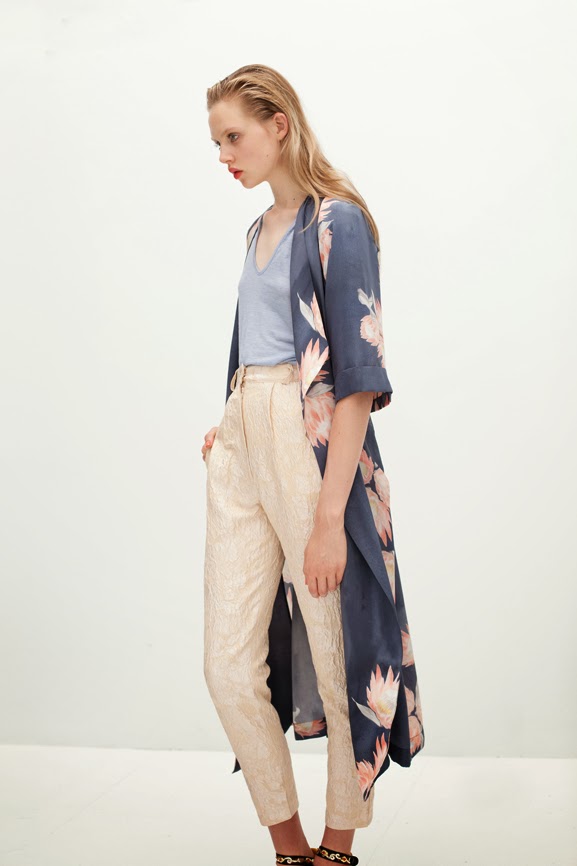
Julie White is an Adelaide-born fashion designer whose latest collection "Alter Native" plays with one of my favourite native Australian flowers - the waratah. Cannot wait to get my hands on a pair of these gorgeous pants! You can see an interview she did with Oyster Magazine here. 


All images VIA http://www.hellojuliewhite.com

Sunday, October 27, 2013

SELLING DREAMS: ONE HUNDRED YEARS OF FASHION PHOTOGRAPHY


Image VIA http://apowl.com

‘Beyond the simple recording of fabric and surface detail, the most memorable images fulfil or challenge the desires and aspirations of the viewer.’

WORDS - aside from those in single quotation marks which have been sourced from the exhibition notes - BY SIGRID (SIGGI) MCCARTHY.

The State Library of NSW’s current exhibition Selling Dreams features the works of many outstanding fashion photographers. The images on display have been drawn from the collections of the Victoria and Albert Museum (V&A) in London, and chronicle the evolution of fashion photography as an art form and as a form of advertising. As stated by the V&A, ‘these images reflect contemporary culture, world events and the dramatic shifts in women’s roles throughout the Twentieth-Century.’

It is clear that the exhibition endeavours to explore the relevance of fashion photography throughout history and indeed highlight that the role of a fashion photographer – as declared by Irving Penn - is not merely to sell clothes, but to sell dreams.

One can only really appreciate how far fashion publications have come if they stop to consider the pre-photography age, when magazines featured engraved illustrations of fashion designs and only had a limited readership. In 1911, renowned photographer Edward Steichen proclaimed his L’art de la Robe series of photographs – printed in Art et Décoration – the first serious fashion photographs ever made. These images were of women adorned in decadent headpieces and glamorous gowns by French designer Paul Poiret.

Each wall of the gallery space in the State Library is dedicated to a certain era of fashion photography. There are plaques that eloquently describe each image’s significance and how the photographer has employed certain techniques to achieve the perfect shot. We are forced to contemplate the brilliance behind these images and I found myself leaving the exhibition with a greater appreciation of these artists and their craft. Apparently Horst P. Horst - the German-American fashion photographer - was so precise that the lighting for a single image could take three days to perfect.

The contexts in which these photographs have been taken are also explored by the V&A and we are given a greater understanding of how fashion photography has engaged in cultural movements over time. One particular movement noted in the exhibition is Surrealism, which began in the early 1920s and influenced photographers to ‘use new techniques and unexpected juxtapositions to challenge perceptions of reality, to amuse and to disturb.’

Being artists, fashion photographers can at times struggle to achieve an image that satisfies both their artistic eye and the magazine’s demands. While Irving Penn was right to say that the role of a fashion photographer is to not only sell clothes, but also to sell dreams, one cannot deny that at the core of any fashion editorial is the drive to sell the designs on display. After all, fashion is big business and these photographers would have nothing to shoot if the fashion houses ceased to exist due to financial hardship. Striking this balance was particularly problematic for Lillian Bassman, who had a strong desire to produce images that evoked a certain mood. The V&A notes that this desire often ‘took precedence over depicting the details of the clothes’ and Lillian was told by the Editor of Harper’s Bazaar Carmel Snow that, “You are not here to make art, you are here to show the buttons and the bows.”

As the decades progressed, fashion photographers continued to look for new ways to reach their audience and to reflect or challenge society. The 1950s saw many fashion photographers adopt ‘a more spontaneous, photojournalistic approach’ - shooting models in bustling streets and public spaces and encouraging more candid imagery. The fashion photography of the 1960s then engaged with the feminist movement as the body was ‘liberated from constricting undergarments and corsetry’ and women began demanding more from the fashion industry and from the world as a whole. Renowned photographers such as David Bailey influenced the trend towards a more youthful look, by working closely with teenage models Twiggy and Jean Shrimpton.

An era of fashion photography that interests me greatly is that of the 1970s. The V&A notes that during this time, photographers ‘tested the limits of acceptable fashion imagery’ and many of the works emerging throughout this decade were ‘informed by the potentially controversial themes of religion and violence.’ The exhibition’s focus on the work of Deborah Turbeville and Sarah Moon was especially interesting, as our attention is drawn to the fact that these women’s ‘contemplative images provided female perspectives on the themes of beauty and sexual objectification.’ I am particularly flawed by Deborah Turbeville’s brave and often controversial portfolio, as there is a striking contrast between her images and those of conventional fashion photography. Her notorious Bath House Series - published in Vogue in 1975 – caused significant outrage from critics who believed the images ‘promoted lesbianism and trivialised the horrors of the Holocaust gas chambers.’ I was thrilled to find some of the images in this provocative series on display in the State Library.  

Moving on to the fashion photography of today, the advance in technology is particularly stark. The images on display in the exhibition highlight just how dramatically the nature of fashion photography has evolved. We realise that the relationship between photograph and narrative has become stronger than ever; 'Today's most dazzling fashion images are rich with colourful and poetic narratives. Big budgets, set designers and multiple stylists are employed to create elaborate fantasies.' This notion is especially clear in the work of Tim Walker - some of which can be seen here. 

Aside from celebrating the work of brilliant fashion photographers, Selling Dreams also makes a point of emphasising the need for great collaboration. We are reminded that, 'Every fashion image is a carefully staged collaboration between magazine, photographer and model, designed to tell a story or to sell a product.' 

Great fashion photography is indeed that which seduces the viewer and draws them into another world - a world of fantasy and unquestionable beauty. The V&A transported me into this world through its gorgeous exhibition and I would highly recommend that you pop into the State Library before the exhibition ends on November  10th 2013. 

The fashion photographers from Selling Dreams:

Baron Adolf de Meyer
Baron George Hoyningen-Huene
Brian Duffy
Bruce Weber
Cecil Beaton
Corinne Day
Craig McDean
David Bailey
Deborah Turbeville
Edward Steichen
Elaine Constantine
Erwin Blumenfeld
Frank Horvat
Genevieve Naylor
Gian Paolo Barbieri
Glen Luchford
Guy Bourdin
Helmut Newton
Herbert List
Horst P. Horst
Ilse Bing
Irving Penn
Jason Evans
Jeanloup Sieff
John Cowan
John French
John Rankin Waddell
Jim Lee
Juergen Teller
Lillian Bassman
Melvin Sokolsky
Miles Aldridge
Norman Parkinson
Peter Rose Pulham
Richard Avedon
Rob Hillier
Ronald Traeger
Sarah Moon
Scott Schuman
Steve Johnson
Steven Klein
Terence Donovan
Tim Walker
William Klein
Related Posts Plugin for WordPress, Blogger...